I’ve been watching agencies struggle with the same problem for years: they’re doing the most technically sophisticated email work in the industry — managing deliverability across 10, 20, 50 brands at once — but they’re doing it manually, client by client, dashboard by dashboard.
That’s not an expertise problem. That’s a leverage problem. And AI just solved it.
We just released a guide I’m genuinely excited about: Claude + Klaviyo Deliverability Guide for Agencies.
What’s the Claude for Klaviyo Deliverability Guide for Agencies?
It’s a working library of 14 production-grade prompts, built specifically for agencies managing a portfolio of Klaviyo clients, not a single brand.
Every prompt follows the same shape:
- One-line use case
- Copy-paste-ready prompt with the output format built in
- Operator note flagging what to watch for
You paste it in. Claude reads the live Klaviyo account. You get a formatted, client-ready output.
What Klaviyo Deliverability Problems Are Solved for Agencies?
The guide is organized around the three jobs that actually fill an agency’s week.
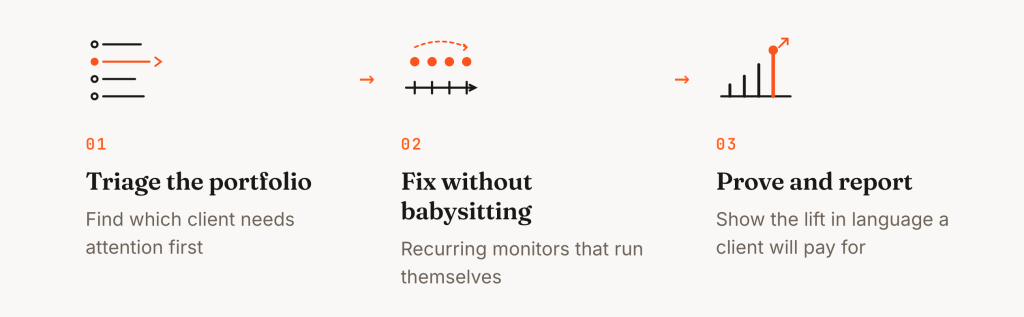
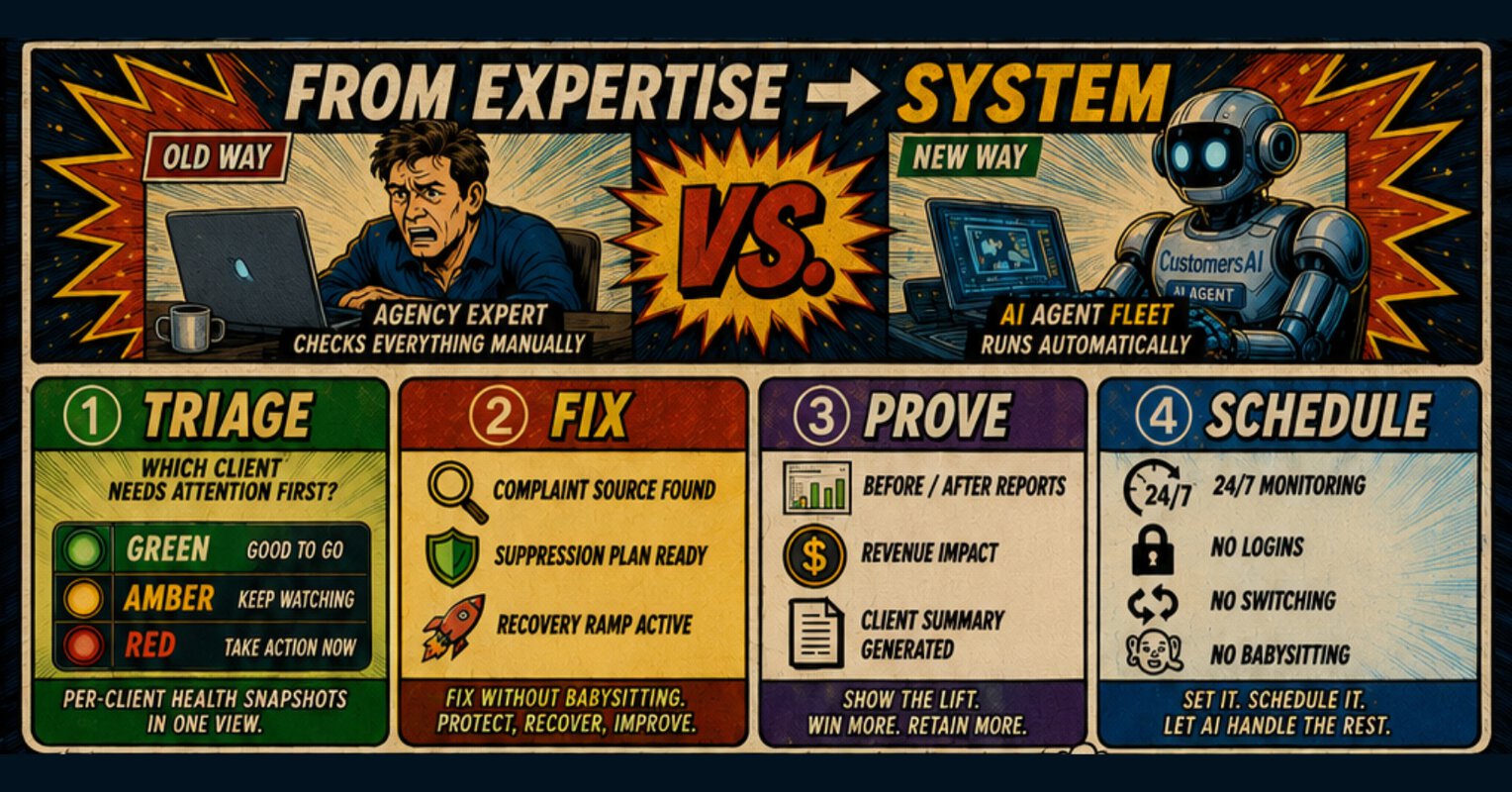
First: triage. Which client is on fire, which is smoldering, which can wait? The per-client health snapshot prompt pulls open rate, engaged share, complaint rate, and bounce rate and returns a GREEN / AMBER / RED status with a one-line read. Run it across your whole book in one sitting.
Second: fix without babysitting. Suppression plans that show the protections before touching anything, complaint-source traces that name the exact send causing the spike, reputation ramps after a cleanup that keep clients from torpedoing their own recovery with one big blast.
Third: prove the lift. Before/after recovery reports, monthly client deliverability summaries written for the founder who reads for 60 seconds, anomaly scans that flag only what fell outside that client’s own baseline — not some generic industry benchmark.
The segment setup section is where I’d tell every agency to start. Six segments — Active, Cooling, Cold, Dead, Suppression Candidates, Win-Back Protection, VIP/High-LTV Protection — built once per account, named exactly as the prompts expect. Once they exist, every downstream prompt in the guide works without recreating anything. It’s a 20-minute setup that unlocks the whole playbook.
And here’s the part I really want agencies to think about: scheduling.
Scheduling Deliverability Maintenance & Fixes with Claude for Klaviyo
For a handful of clients, Claude Cowork handles it — set a prompt on a cadence, it runs while the client’s account is connected.
But for a larger book, the “one connector, one account at a time” constraint becomes a real bottleneck.
The guide covers both paths, including how to use Tasklet to give each merchant their own dedicated agent, permanently connected to that client’s account, running reports in the cloud 24/7 with no machine-on required, no reauthorizing, no switching.
That’s the setup that turns this from a prompt library into an actual system.
The Takeaway: The agencies that win the next three years won’t have more expertise than their competitors — they’ll have that expertise running on a schedule, across every client, without anyone having to remember to run it.
What’s In the Claude for Klaviyo Deliverability Guide for Agencies?
14 copy-paste prompts, zero fluff. Every prompt has a one-line use case, the prompt itself (with output format built in), and an operator note. Organized into three sections: Triage, Fix, Prove.
Section 1 — Triage the portfolio: Per-client health snapshots with GREEN/AMBER/RED status. Engagement-cohort breakdowns (Active/Cooling/Cold/Dead). Infrastructure checks. Placement reads. Over-mailing analysis. Six prompts to answer “which client needs me first?”
Section 2 — Fix without babysitting: A suppression plan that shows protections before touching anything — VIPs, Win-Back candidates, active-flow recipients held out automatically. A complaint-source trace that identifies the exact campaign causing the spike. A 3-week reputation ramp tied to each client’s own baseline signals, with a one-line client note that pre-empts the “why are you sending to fewer people?” conversation.
Section 3 — Prove and report: Before/after recovery proof with HTML charts that go straight into client decks. Monthly deliverability reports written for founders, not engineers. Anomaly scans that surface only what broke that client’s own normal — so you’re not crying wolf on stable accounts. A list-growth quality audit that reframes the metric clients love (subscriber count) into the one that actually predicts deliverability (subscriber quality).
Bonus prompt — stress-test your data provider. One prompt that tells you whether the identity or enrichment provider you’re using (or a client is using) can actually pass a basic quality test. This is the one agencies will want to run before onboarding a new vendor.